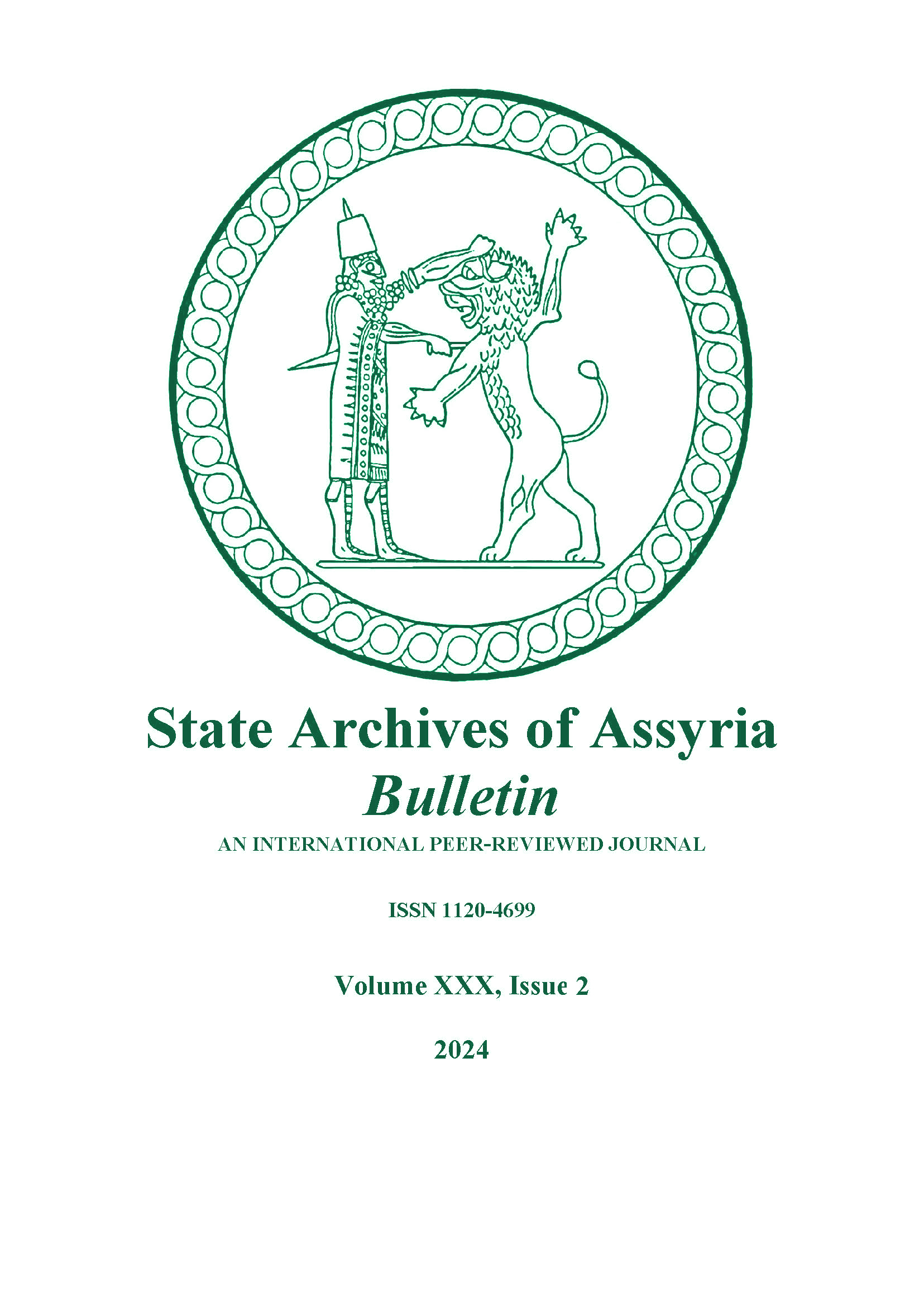
Marduk in The Neo-Assyrian Royal Inscriptions from Adad-Nārārī Ⅱ to Sennacherib
DOI:
https://doi.org/10.13136/1120-4699/30/2/093Parole chiave:
Marduk, Bēl, Neo-Assyrian royal inscriptions, Sargon Ⅱ, Sennacherib, Assyria, 10th–7th centuries BCEAbstract
Marduk appeared in the Neo-Assyrian royal inscriptions since the reign of Adad-nārārī Ⅱ. From the reign of Adad-nārārī Ⅱ onwards, his status in royal ideologies began to be increased, and he gradu-ally acquired various roles in Assyrian imperialism and kingship. During the early reign of Tiglath-pileser Ⅲ, Marduk’s prominence was still visible. Sargon Ⅱ continued this trend and elevated Mar-duk to a new level. Sargon Ⅱ’s policies were deemed as “too Babylonian” by his son, Sennacherib, who reversed course in order to de-Babylonianise Assyria. After about a decade of almost total silence on Marduk (and Bēl) in his royal inscriptions, Marduk began to be mentioned after 691 BC, which is the year that Sennacherib fought the battle of Ḫalule against the Babylonians and their allies, followed by the capture of Babylon and the destruction of Marduk’s statue in 689 BC. A detailed examination of Marduk’s character and status in the royal ideologies from Adad-nārārī Ⅱ to Sennacherib serves to better contextualize Sennacherib’s policies to erase Marduk and de-Baby-lonianise Assyria.
Downloads
Dowloads
Pubblicato
Fascicolo
Sezione
Licenza

Questo volume è pubblicato con la licenza Creative Commons Attribuzione - Condividi allo stesso modo 4.0.
State Archive of Assirya Bulletin pubblica in internet, ad accesso aperto, con licenza:
|
|
CCPL Creative Commons Attribuzione |
L'autore conserva il copyright sul suo contributo, consentendo tuttavia a chiunque "di riprodurre, distribuire, comunicare al pubblico, esporre in pubblico, rappresentare, eseguire e recitare l'opera", purché siano correttamente citati l'autore e il titolo della rivista.
L’autore, al momento della proposta di pubblicazione, è inoltre tenuto a dichiarare che il contenuto e l’organizzazione dell’opera è originale e non compromette in alcun modo i diritti di terzi, né gli obblighi connessi alla salvaguardia di diritti morali ed economici di altri autori o di altri aventi diritto, sia per testi, immagini, foto, tabelle, sia per altre parti di cui il contributo può essere composto.
L’autore dichiara altresì di essere a conoscenza delle sanzioni previste dal codice penale e dalle leggi speciali per l’ipotesi di falsità in atti ed uso di atti falsi, nonché da quanto previsto dal GDPR e dalle Regole deontologiche per il trattamento a fini di archiviazione nel pubblico interesse o per scopi di ricerca storica pubblicate ai sensi dell’art. 20, comma 4, del d.lgs. 10 agosto 2018, n. 101 - 19 dicembre 2018 e che pertanto State Archives of Assyria Bulletin è esente da qualsiasi responsabilità di qualsivoglia natura, civile, amministrativa o penale, e sarà dall'autore tenuta indenne da qualsiasi richiesta o rivendicazione da parte di terzi.